
Gravy has an unfortunate tendency to develop problems just as everything else is ready to serve. The roast is resting, the mashed potatoes are finished, and the vegetables are waiting, but the gravy contains stubborn lumps, a layer of separated fat, or surprisingly little flavor. With several dishes competing for attention, there is rarely time to start another saucepan from scratch.
Many common gravy problems can be corrected within approximately five minutes using ordinary kitchen ingredients and utensils. Understanding what has gone wrong helps determine which correction is most likely to work. Adding more flour to lumpy gravy may worsen the problem, while reducing a gravy that already contains too much salt will intensify its saltiness.
The most effective repair depends on the relationship between the liquid, fat, thickener, and seasonings. Some problems require little more than whisking, while others benefit from straining, blending, or incorporating another ingredient. The quantity of gravy and the severity of the problem will determine whether five minutes is sufficient, particularly if additional cooking is necessary.
Identify the Problem Before Making Adjustments
Stir the gravy thoroughly and examine its consistency. Dip a spoon into the saucepan, allow some gravy to run off, and observe how the remaining sauce behaves. A traditional smooth gravy should generally coat the back of the spoon evenly, although the desired thickness depends on the food it accompanies.
Soft, pale clumps may indicate that flour or another starch was unevenly incorporated during preparation. Shiny pools of fat that collect across the surface suggest that the gravy contains excess fat or that the fat has separated from the liquid. A gravy that appears smooth but tastes weak may need additional seasoning, concentrated stock, or ingredients that contribute savory flavor.
Temperature can complicate the assessment because starch-thickened gravies generally become thicker as they cool. Stock containing substantial amounts of gelatin may also contribute to this change in consistency. A gravy that appears slightly thin while simmering may reach a suitable consistency by the time it arrives at the dinner table, so avoid correcting minor differences too aggressively.
How to Fix Lumpy Gravy
Flour and cornstarch thicken liquids through a process called gelatinization. As starch granules are heated in the presence of water, they absorb moisture and swell, increasing the liquid’s viscosity. When dry flour comes into direct contact with hot liquid, the starch around the outside of a clump can gelatinize before the interior becomes properly hydrated.
The resulting lump may have a sticky exterior surrounding a pocket of dry flour. Continued stirring sometimes breaks apart smaller clumps, but larger ones can remain resistant even after prolonged cooking. Understanding how starch gelatinization works helps explain why cooking lumpy gravy longer does not necessarily produce a smooth sauce.
Start with a Wire Whisk
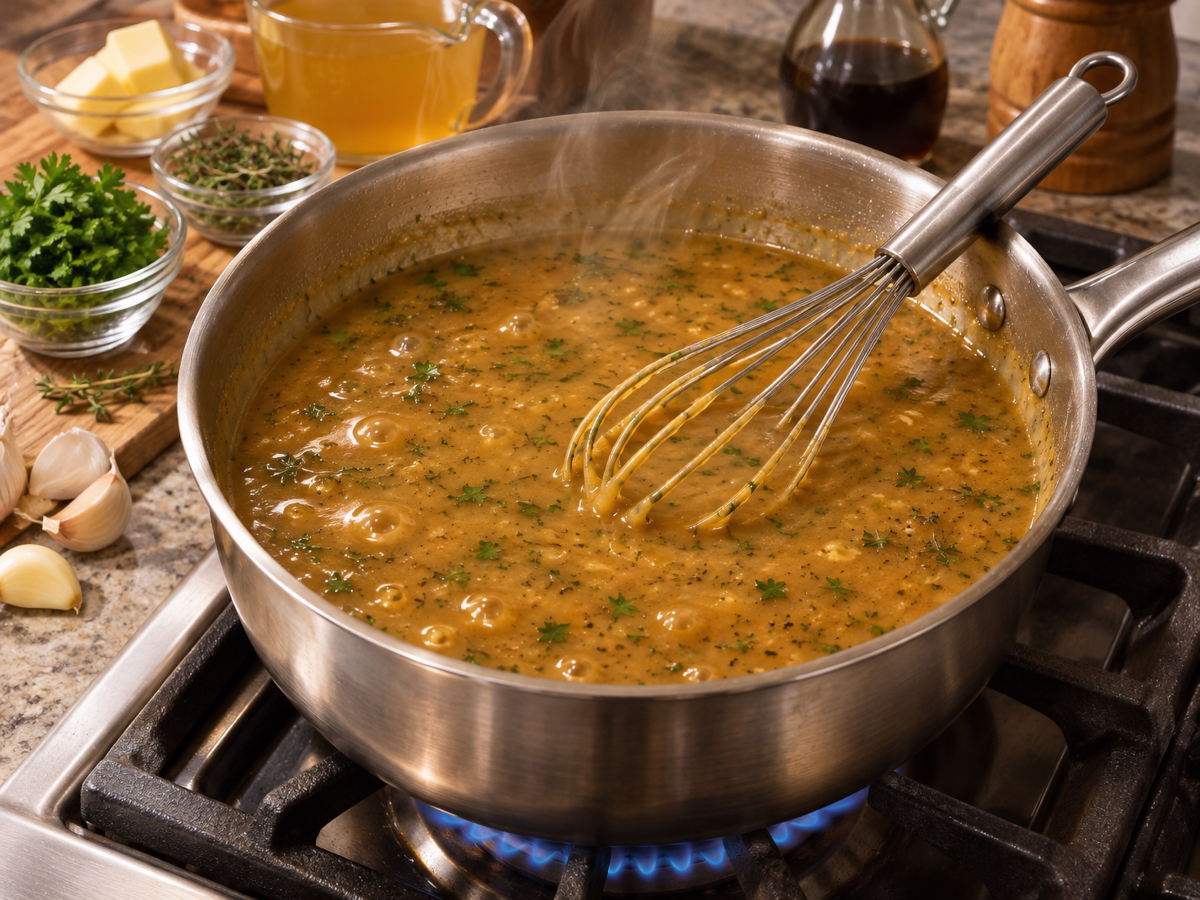
Reduce the heat and whisk the gravy briskly, paying particular attention to the bottom and corners of the saucepan. A wire whisk provides multiple points of contact that help break apart small clumps and redistribute the thickener throughout the liquid. If the lumps begin disappearing, continue whisking until the consistency becomes uniform.
This approach works best when the gravy develops minor clumping during the incorporation of flour or stock. Larger lumps that remain intact after vigorous whisking are unlikely to disappear through stirring alone. A strainer or immersion blender will generally provide a faster solution at that point.
Remove Stubborn Lumps with a Strainer
Place a fine-mesh strainer over a clean saucepan or heat-resistant bowl and carefully pour the gravy through it. Use a spoon or silicone spatula to gently encourage the liquid to pass through, leaving the larger flour clumps behind. Avoid crushing substantial lumps against the mesh, particularly if they contain uncooked flour.
Straining works especially well for traditional turkey, chicken, or beef gravy intended to have a smooth consistency. Removing the lumps may also remove some of the thickener, leaving the finished gravy slightly thinner than expected. Return the strained liquid to the stove, stir thoroughly, and evaluate its consistency before deciding whether additional thickening is necessary.
Use an Immersion Blender for Persistent Clumps
An immersion blender can break apart stubborn lumps directly in the saucepan. Remove the pan from the heat, keep the blender head submerged, and blend in short intervals until the gravy becomes smooth. Keeping the blade assembly beneath the surface reduces the risk of splashing hot liquid.
The University of Wyoming Extension’s gravy preparation guidance identifies both straining and blending as effective methods for correcting lumps. Blending, however, may also break apart desirable ingredients such as mushrooms, onions, sausage pieces, or fresh herbs. For gravies containing these ingredients, removing the larger pieces temporarily allows the liquid to be blended without destroying their intended texture.
Remember that blending disperses flour but does not cook it. Ordinary flour is a raw agricultural product that may contain harmful bacteria, as explained in the FDA’s guidance on handling flour safely. If the gravy contains uncooked flour, return it to the stove and complete the necessary cooking before tasting or serving it, even if the repair takes longer than five minutes.
How to Fix Broken or Greasy Gravy
A broken gravy often develops an oily appearance, with visible droplets or pools of fat separating from the thicker liquid beneath. This can occur when excessive rendered fat from a roast is incorporated into the gravy or when fat separates from a sauce that previously appeared smooth. Although fat contributes flavor and richness, excessive amounts can produce a greasy texture.
Traditional flour-thickened gravy contains a water-based liquid, starch, and varying amounts of dispersed fat. The increased viscosity provided by the starch helps slow the movement of fat droplets through the liquid. If the gravy contains too much fat or lacks sufficient structure to maintain an even dispersion, those droplets may collect into larger pools at the surface.
Remove Excess Fat Before Attempting to Recombine the Gravy
Take the saucepan off the heat briefly and allow the gravy to settle. Once the excess fat collects at the surface, carefully skim it away with a shallow spoon. Tilting the saucepan slightly may help the fat gather in one area, making it easier to remove without losing much of the gravy underneath.
This correction is particularly useful when making gravy from fatty cuts of beef, pork, duck, or heavily buttered poultry. A thick layer of excess fat is difficult to correct through whisking alone, and attempting to incorporate it all into the sauce may produce an unpleasant mouthfeel. Any clean rendered fat removed during this process can be reserved for another cooking application if handled and stored safely.
Bring the Gravy Back Together
After removing the excess fat, return the saucepan to gentle heat and whisk thoroughly. If the remaining gravy is particularly thick or concentrated, incorporate a small amount of warm, unsalted stock while whisking. The additional liquid may help create a more suitable balance between the water-based portion of the sauce and the remaining fat.
An immersion blender can also redistribute separated fat into smaller droplets, improving the appearance and consistency of the sauce. Serious Eats’ discussion of common gravy problems describes blending and additional starch as possible methods for repairing separated gravy. Additional thickener is most appropriate when the sauce also lacks body, since thickening an already dense gravy may introduce another consistency problem.
Cream-based and milk-based gravies require a slightly different approach. A grainy appearance accompanied by small curds may indicate that dairy proteins have coagulated, particularly following excessive heating or exposure to acidic ingredients. Gentle whisking or blending may improve the appearance, but significant protein coagulation cannot reliably be reversed, and a severely curdled dairy gravy may need to be replaced.
How to Fix Bland Gravy
A gravy can have an excellent consistency and still contribute very little flavor to a meal. This often happens when a small quantity of roasting juices is stretched with too much water or when a mild stock forms the base of the sauce. Excessive thickening can also produce a pasty consistency that makes the gravy less enjoyable, while insufficiently cooked flour may introduce an undesirable floury taste.
Taste the fully cooked gravy before adding several seasonings at once. A gravy that lacks salt requires a different correction from one that is adequately salted but lacks savory depth, aromatic character, or the concentrated flavor of roasted meat. Identifying which characteristic is missing helps prevent unnecessary additions that may change the sauce more than intended.
Correct the Seasoning Gradually
Begin with a small pinch of salt if the gravy tastes underseasoned, stir thoroughly, and taste again. Salt influences the perception of other flavors and can suppress certain bitter tastes, allowing existing ingredients to become more noticeable. Freshly ground black pepper can contribute additional aroma and a mild pungency, particularly in beef, sausage, and mushroom gravies.
Exercise restraint when using commercial broth, bouillon, or concentrated stock products because these ingredients may already contain substantial amounts of sodium. A gravy that tastes properly seasoned before reduction may become excessively salty as water evaporates. Make the final salt adjustment once the sauce is close to its intended serving consistency.
Add More Savory Depth
When the salt level is satisfactory but the gravy still tastes flat, ingredients containing naturally occurring glutamates and other savory compounds may help. Soy sauce, mushroom powder, miso, concentrated stock, and Worcestershire sauce can contribute varying degrees of umami, the savory taste commonly associated with foods such as mushrooms, aged cheeses, meat broths, and fermented products. These ingredients also introduce their own distinctive flavors, so they should be selected according to the character of the gravy.
Worcestershire sauce works particularly well with many beef gravies, while concentrated poultry stock can strengthen chicken or turkey gravy without introducing a substantially different flavor. Mushroom powder is another useful option for beef, vegetable, and mushroom-based sauces. Miso can provide additional savory character, although its fermented flavor may be more noticeable in a mild poultry or white gravy.
Begin with small additions, allowing each ingredient to disperse before tasting again. Soy sauce, Worcestershire sauce, miso, and many commercial stock concentrates contribute salt along with their other flavors. Unsalted concentrated stock may be a better choice when the gravy is already adequately seasoned.
Recover Flavor from the Roasting Pan
Some of the most useful ingredients for correcting bland gravy may still be attached to the bottom of the roasting pan. The brown deposits left behind during roasting, commonly called fond, contain concentrated cooking residues and flavorful compounds produced through browning. Many of these compounds develop through the Maillard reaction, which involves interactions between amino compounds and reducing sugars during cooking.
If the roasting pan contains usable browned deposits, add a small amount of stock or water and loosen them with a wooden spoon or spatula. Warm the pan on the stove if the cookware is designed for stovetop use, stirring until the flavorful deposits dissolve into the liquid. Incorporate the recovered liquid into the gravy and allow it to heat thoroughly, checking the consistency and seasoning afterward.
Avoid scraping blackened or burned deposits into the sauce, as these may introduce strong bitter flavors. If the recovered cooking juices contain considerable fat, separate the excess before incorporating them. Deglazing a roasting pan can improve the gravy considerably, but adding greasy or scorched drippings may create problems that require further correction.
Finish with Herbs or a Little Acidity
Fresh herbs can introduce aromatic qualities that a gravy made entirely from stock and flour may lack. Thyme complements many poultry and beef gravies, sage works well with poultry and pork, and finely chopped parsley provides a fresher finish. Delicate herbs such as parsley are particularly suitable for late additions, while stronger woody herbs may benefit from additional time to release their flavor.
A few drops of lemon juice, cider vinegar, or wine vinegar may improve a rich gravy that tastes heavy or dull. The introduction of acidity provides a contrasting taste that can make the richness of fat less prominent. Add acidic ingredients cautiously to dairy-based gravies because acidity, particularly in combination with heat, can encourage protein coagulation and curdling.
How to Fix Gravy That Is Too Thin
Thin gravy may contain insufficient starch, excessive liquid, or starch that has not yet been heated sufficiently to develop its thickening effect. Before adding another thickener, bring the gravy to an appropriate simmer while stirring and observe whether its consistency improves. If the sauce is weak in flavor as well as thin, reducing it uncovered may help concentrate its ingredients, provided it does not already contain too much salt.
A cornstarch slurry offers a relatively quick correction when the flavor is satisfactory but the gravy needs more body. Texas A&M AgriLife Extension’s guidance on thickening sauces recommends combining one part cornstarch with two parts cool water. A small batch can be prepared using one teaspoon of cornstarch and two teaspoons of cool water, although the amount needed will depend on the volume and existing consistency of the gravy.
Stir the slurry immediately before using it because cornstarch settles when left standing. Gradually whisk a portion into the hot gravy and return the sauce to a brief simmer, allowing the starch to thicken the liquid before deciding whether more is necessary. Adding the entire mixture without assessing the results may produce an excessively thick sauce.
Cornstarch generally creates a glossier, more translucent finish than wheat flour and has greater thickening power by weight. Excessive amounts may produce an undesirable gel-like consistency as the gravy cools, while prolonged cooking can weaken the thickening effect. A modest addition followed by brief cooking is particularly useful when correcting gravy immediately before serving.
Another option is beurre manié, a French preparation traditionally made by kneading softened butter and flour together, commonly in equal weights. Small portions of the paste can be whisked into simmering gravy, where the melting butter helps disperse the flour. This method requires additional cooking because the flour has not been cooked beforehand, making a cornstarch slurry more convenient when serving time is only a few minutes away.
How to Fix Gravy That Is Too Thick
Overly thick gravy is generally one of the easiest consistency problems to correct. Place the saucepan over gentle heat and incorporate warm stock a little at a time, whisking between additions. Using a stock that complements the existing gravy helps preserve its flavor while restoring a suitable consistency.
Water is also acceptable, particularly when the gravy is already intensely flavored or slightly oversalted. For milk-based sausage gravy or country gravy, additional milk may better preserve the original character of the sauce. Use unsalted liquids whenever possible so that correcting the consistency does not introduce an additional seasoning problem.
Allow the gravy to become fully heated before making the final adjustment. Refrigerated gravy often appears substantially thicker than it does at serving temperature, particularly when prepared with gelatin-rich stock. Adding too much liquid while the sauce is still cold may leave it unnecessarily thin once reheated.
Correcting Gravy That Has Become Too Salty
Oversalted gravy presents a different challenge because ordinary cooking methods cannot selectively remove a meaningful quantity of dissolved salt. Simmering the sauce to reduce its volume will make the problem worse, while adding sugar or acid may alter how the saltiness is perceived without reducing its actual concentration. These additions can also introduce unwanted sweetness or acidity.
Dilution is the most predictable correction. Add unsalted stock or water gradually until the saltiness becomes acceptable, then adjust the consistency if necessary. In more severe cases, preparing a separate portion of unseasoned gravy and combining it with the oversalted batch may preserve the desired flavor and texture more effectively than adding large quantities of plain water.
The familiar recommendation to place a raw potato into salty gravy offers little practical benefit for a last-minute repair. Potatoes can absorb some of the surrounding liquid, including dissolved salt, but they do not act as a selective salt-removal ingredient. Cooking a potato in the gravy also requires additional time and may alter the sauce’s consistency.
Keep Gravy in Good Condition Until Serving
Once the gravy has been corrected, avoid allowing it to continue reducing unnecessarily. Prolonged heating can concentrate the seasoning, encourage scorching, and alter the consistency. If the gravy needs to remain on the stove, keep it covered over gentle heat when practical and stir occasionally to maintain an even temperature.
According to federal food-safety guidance, cooked foods being held hot before serving should remain at 140°F or above. Refrigerate perishable leftovers promptly in shallow containers, within two hours of leaving safe temperature control or within one hour when the surrounding temperature exceeds 90°F. Gravy left outside safe temperature control beyond these limits should be discarded rather than reheated in an attempt to recover it.
When reheating properly stored leftover gravy, the FDA’s safe food-handling recommendations call for bringing gravies, soups, and sauces to a boil and reheating leftovers to at least 165°F. Stir during reheating to distribute heat evenly. Any final consistency adjustments can be made after the gravy has reached a safe reheating temperature, since its texture may change considerably as it warms.
A gravy boat can also be warmed with hot water before serving. Empty and dry the vessel before pouring in the gravy to reduce the immediate heat loss that occurs when hot liquid meets cold ceramic or glass. This helps maintain serving consistency during the meal, although a warmed serving vessel should not be considered a substitute for proper hot holding.
Preventing Gravy Problems Before They Begin
Many last-minute gravy repairs can be avoided by controlling the proportions of fat, liquid, and thickener during preparation. When making a gravy with a roux, cook the flour and fat together before gradually incorporating the stock while whisking. The fat helps disperse the flour, reducing the likelihood of dry particles clumping together when they encounter the liquid.
Separating excess fat from meat drippings also provides greater control over the finished sauce. Reserve the flavorful cooking juices and measure the rendered fat according to the quantity of gravy being prepared. A particularly fatty roast may produce considerably more rendered fat than the gravy needs, while a leaner roast may require additional butter or another suitable cooking fat.
It is worthwhile to keep a small quantity of unsalted stock separate from the liquid initially used to prepare the gravy. Homemade stock, commercial unsalted broth, or properly prepared unsalted stock concentrate can all serve this purpose. Warming that reserved liquid shortly before dinner allows it to be incorporated without substantially lowering the temperature of the finished gravy, providing room for final adjustments without interrupting the preparation of the other dishes.