


 Link copied!
Pasta alla Norcina
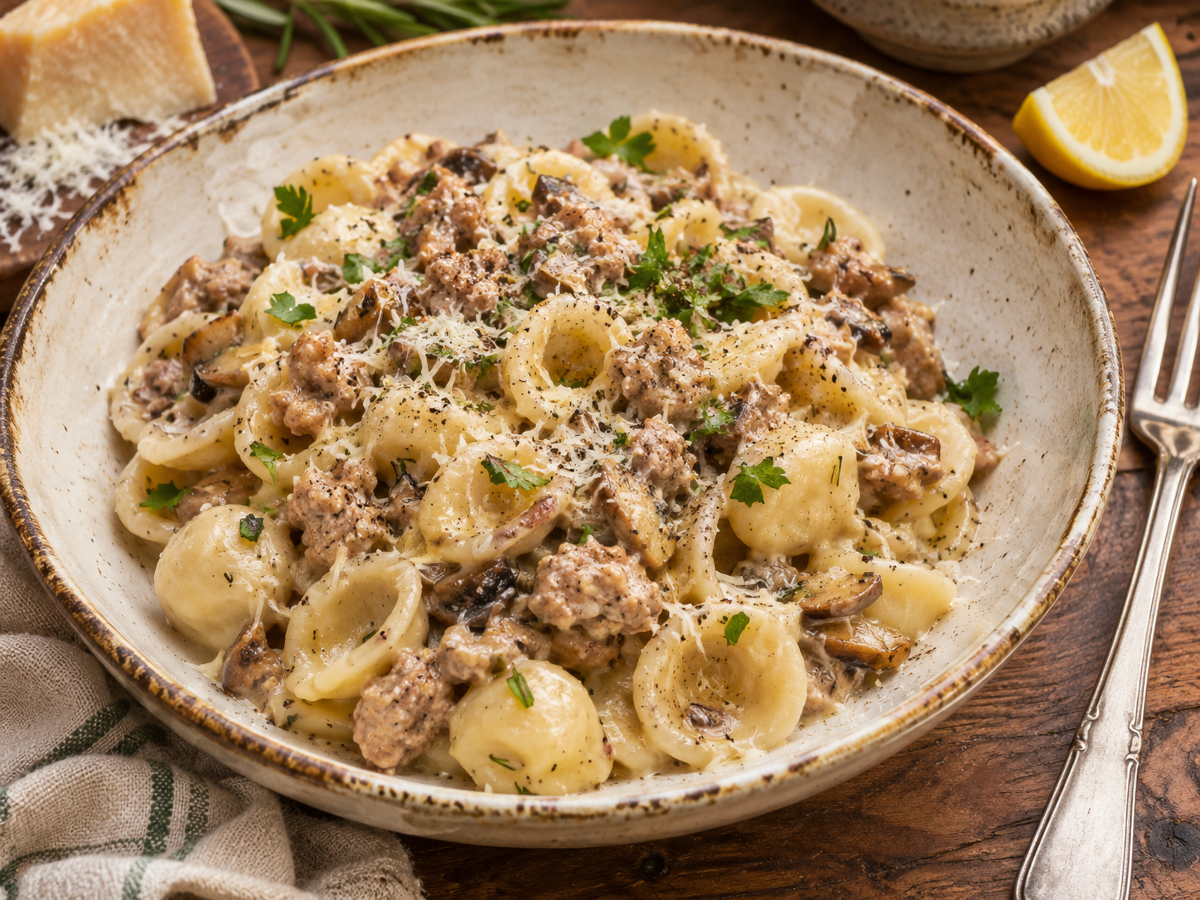
Pasta alla Norcina is an Italian pasta dish originating from Norcia, a town in the Umbria region of central Italy known for its long tradition of producing flavorful pork sausages and cured meats. The dish traditionally combines seasoned sausage with a creamy sauce, creating a hearty pasta meal with relatively simple ingredients.
I can't remember my original inspiration for the dish as I wrote it down so long ago but it does have my own additions and twist. My version uses ground pork seasoned with garlic, fresh rosemary, fennel and nutmeg to develop the flavors associated with Italian sausage. Finely chopped cremini mushrooms add an earthy depth, while white wine, heavy cream, and Pecorino Romano create a savory sauce that coats the pasta. A little fresh parsley and lemon juice added at the end help balance the richness.
Orecchiette, the small ear-shaped pasta whose name translates to "little ears," works particularly well because its curved shape catches the bits of pork and mushrooms. The result is a satisfying Italian-style pasta dish that brings together several complementary flavors without requiring a complicated cooking process.
| Prep Time | Cook Time | Total Time |
|---|---|---|
| 20 Minutes | 30 Minutes | 50 Minutes |
- Sea Salt and Pepper
- 1 lb Ground Pork
- 3 garlic cloves, finely grated or minced
- 1 small shallot
- 1 1/2 tsp Fresh Rosemary
- 1/4 tsp Ground Nutmeg
- 1/2 tsp lightly crushed fennel seeds
- 12 oz Cremini Mushrooms, chopped into bits
- 7 tsp Extra Virgin Olive Oil
- 3/4 cup Heavy Cream
- 1 lb Orecchiette
- 1/2 cup White Wine
- 3/4 cup Pecorino Romano cheese*, grated
- 3 TBL Fresh Parsley, minced
- Juice of half a lemon (1 TBL)
- Prepare the ingredients. Finely mince the shallot and garlic, chop the cremini mushrooms into small pieces, and finely chop the fresh rosemary and parsley. Lightly crush the fennel seeds to release their aroma. Grate the Pecorino Romano cheese and set aside.
- Season the ground pork. In a medium mixing bowl, combine the ground pork with the crushed fennel seeds, ground nutmeg, 1 teaspoon of fresh rosemary, 1/2 teaspoon of sea salt, and 1/4 teaspoon of freshly ground black pepper. Gently mix until the seasonings are evenly distributed, being careful not to overwork the meat.
- Prepare the pasta water. Fill a large pot with water, season with salt, and bring to a boil over high heat. Keep the water ready while preparing the pork and mushroom sauce so the pasta can cook alongside the remaining ingredients.
- Brown the pork. Heat 2 teaspoons of extra virgin olive oil in a large skillet over medium-high heat. Add the seasoned ground pork, breaking it into small pieces with a wooden spoon or spatula. Cook for approximately 8–10 minutes, stirring occasionally, until the pork is browned and reaches an internal temperature of 160°F (71°C). Transfer the cooked pork to a separate bowl, leaving any flavorful browned bits in the skillet.
- Cook the mushrooms. Add the remaining 5 teaspoons of extra virgin olive oil to the same skillet, followed by the chopped cremini mushrooms. Cook over medium-high heat for approximately 7–9 minutes, stirring occasionally, until the mushrooms release their moisture and begin developing a golden-brown color. Allowing the moisture to evaporate before stirring too frequently will help the mushrooms brown rather than steam.
- Add the shallot, garlic, and rosemary. Reduce the heat to medium and add the minced shallot to the mushrooms. Cook for approximately 2 minutes, stirring frequently, until the shallot softens. Add the minced garlic and remaining 1/2 teaspoon of fresh rosemary, stirring for another 30–60 seconds until fragrant. Avoid allowing the garlic to brown excessively, as it can develop a bitter flavor.
- Deglaze with white wine. Pour the white wine into the skillet, scraping the bottom of the pan with a wooden spoon to release the browned bits left from cooking the pork and mushrooms. Allow the wine to simmer for approximately 2–3 minutes, or until the liquid has reduced by about half.
- Cook the orecchiette. Add the orecchiette to the boiling salted water and cook according to the package directions until al dente, meaning tender but still slightly firm when bitten. Before draining, reserve approximately 1 cup of the starchy pasta cooking water. Drain the pasta and set aside, timing this step so the pasta finishes close to when the sauce is ready.
- Prepare the cream sauce. Reduce the skillet heat to medium-low and slowly stir the heavy cream into the mushroom and wine mixture. Return the browned pork and any accumulated juices to the skillet, stirring until everything is evenly combined. Allow the sauce to simmer gently for approximately 2–3 minutes, stirring occasionally, until slightly thickened. Avoid boiling vigorously, which can cause excessive reduction.
- Incorporate the Pecorino Romano. Remove the skillet from the heat and gradually add the grated Pecorino Romano cheese, stirring continuously until the cheese is incorporated into the sauce. If the sauce becomes too thick, add a few tablespoons of reserved pasta cooking water at a time until it reaches a smooth, creamy consistency.
- Combine the pasta and sauce. Add the drained orecchiette to the skillet and gently toss until the pasta is coated with the creamy pork and mushroom sauce. Continue adding small amounts of reserved pasta water as needed to help the sauce cling evenly to the pasta. The finished sauce should be creamy without pooling excessively at the bottom of the skillet.
- Add the finishing ingredients. Stir in the minced fresh parsley and 1 tablespoon of lemon juice. Taste the finished pasta and adjust with additional sea salt or freshly ground black pepper as needed. Because Pecorino Romano is naturally salty, taste the sauce before adding more salt.
- Serve immediately. Divide the Pasta alla Norcina among serving bowls while the sauce is warm and creamy. If desired, garnish with additional freshly grated Pecorino Romano, a light sprinkle of parsley, or freshly cracked black pepper.
Serving and Storage Suggestions
- Pasta alla Norcina is substantial enough to serve as a complete meal, although a simple green salad or lightly dressed vegetables can provide a refreshing contrast to the creamy sauce. Warm crusty bread also makes a good accompaniment, especially for enjoying any sauce remaining on the plate.
- This dish is best served immediately because the orecchiette continues absorbing moisture from the sauce as it rests. If you have leftovers, refrigerate them in an airtight container within two hours of cooking and use them within 3–4 days. Reheat gently with a small splash of water or milk to help restore the sauce's consistency.
The lemon juice belongs at the end. Adding it after removing the sauce from the heat gives the finished dish a brighter flavor while reducing the chance that the acidity will affect the cream sauce. Depending on the white wine's acidity, you may find that slightly less lemon produces a better balance.
Nutrition Facts (Per Serving)
"Nutrition values are approximate estimates. Actual facts may vary depending on ingredient brands and preparation methods."
Recipe Rating
Average Rating
5.0 / 5

Rate This Recipe
Login to rate this recipeThis is a variation rather than the most traditional Norcina preparation. Traditional versions commonly use local sausage and sheep's milk ricotta; cream-based variations are also popular. Your combination of mushrooms, rosemary, cream, and Pecorino makes a reasonable adaptation.
For anyone experimenting with homemade pasta dishes, this recipe also demonstrates how a few well-chosen seasonings can transform ordinary ground pork into the flavorful foundation of a satisfying meal. The combination of browned meat, mushrooms, wine, and cheese provides a useful technique that can be adapted to other pasta shapes and savory sauces.