


 Link copied!
Loaded Thanksgiving Leftover Turkey and Cranberry Panini
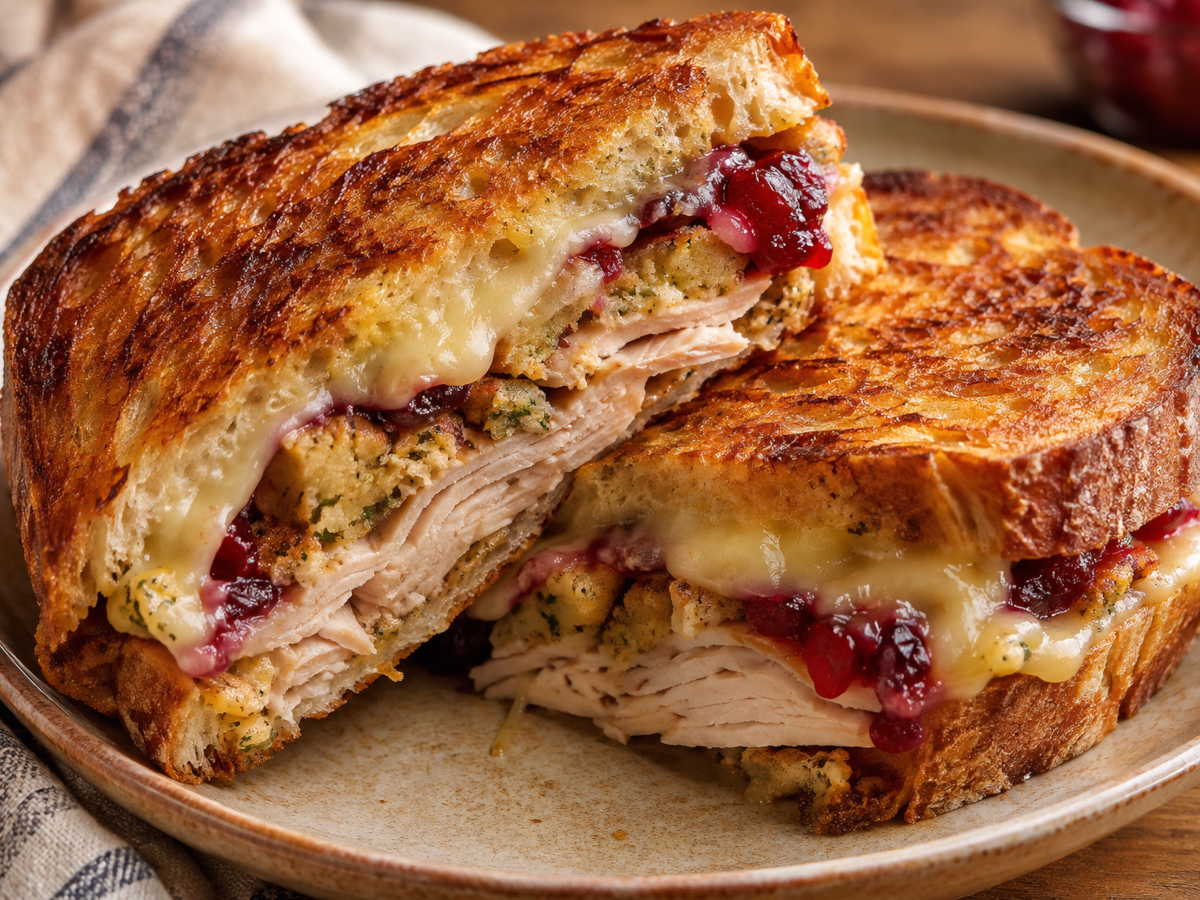
Layers of roasted turkey, herb-seasoned stuffing, cranberry sauce, and melted Gruyère cheese give this Thanksgiving leftover panini the familiar flavors of a holiday dinner with the buttery crunch of a grilled sandwich. Sourdough bread provides a sturdy foundation, while Dijon mustard adds a pleasantly sharp contrast to the sweetness of the cranberries. Each sandwich is substantial enough to serve as a meal on its own.
Refrigerated turkey, particularly breast meat, can become dry when reheated directly on a grill. Warming the turkey separately with a measured amount of chicken broth helps retain moisture while allowing the sandwich to spend less time on the cooking surface. The stuffing is also reheated before assembly, reducing the likelihood of the bread becoming excessively browned before the filling is sufficiently hot.
A generous filling requires careful assembly, moderate cooking temperatures, and gentle pressure during grilling. Thinly sliced cheese placed on both sides of the filling helps hold the ingredients together, while evenly distributed stuffing and cranberry sauce provide balanced flavor throughout the sandwich.
- 6 ounces cooked leftover turkey, thinly sliced
- 1 tablespoon low-sodium chicken broth
- ½ cup cooked leftover Thanksgiving stuffing
- 4 large slices sourdough bread, approximately ½ inch thick
- 2 tablespoons unsalted butter, softened
- 2 teaspoons Dijon mustard
- 3 ounces Gruyère cheese, thinly sliced and divided
- ¼ cup cranberry sauce
- Arrange the turkey slices in a shallow microwave-safe dish and drizzle evenly with the chicken broth. Cover with a microwave-safe lid, leaving an opening for steam to escape.
- Break apart any large pieces of stuffing and place the stuffing in a separate microwave-safe dish with a vented cover.
- Spread the softened butter evenly over one side of each slice of sourdough bread. Turn the slices over and spread ½ teaspoon of Dijon mustard over each unbuttered surface.
- Preheat a large, heavy skillet or flat griddle over medium-low heat.
- Microwave the turkey and stuffing separately in short intervals, rearranging the turkey slices and stirring the stuffing between intervals to promote even heating. Allow approximately 3 to 5 minutes of combined microwave heating time, depending on the appliance.
- Allow the reheated turkey and stuffing to stand briefly, covered, before checking their temperatures in several places with a food thermometer. Both must reach at least 165°F throughout. Continue reheating and rechecking as necessary.
- Divide half of the Gruyère cheese between two slices of sourdough, placing the cheese over the mustard-coated surfaces.
- Divide the hot turkey evenly between the two sandwiches, leaving any excess broth in the microwave-safe dish.
- Spread ¼ cup of heated stuffing over the turkey on each sandwich, gently flattening it into an even layer.
- Spread 2 tablespoons of cranberry sauce over the stuffing on each sandwich, leaving approximately ½ inch of space around the edges.
- Divide the remaining Gruyère cheese between the sandwiches. Close each sandwich with a remaining slice of sourdough, keeping the buttered surfaces facing outward.
- Place both sandwiches on the preheated cooking surface without crowding. Press gently with a wide spatula and cook for approximately 3 to 4 minutes, until the undersides are golden brown.
- Carefully flip the sandwiches and cook for another 3 to 4 minutes. Continue applying gentle pressure occasionally until the bread is crisp, the cheese has melted, and the filling reaches 165°F. Insert the thermometer horizontally through the side of each sandwich to check the temperature near the center. Reduce the heat and continue cooking if additional heating is necessary.
- Transfer the sandwiches to a cutting board, slice diagonally, and serve immediately.
Nutrition Facts (Per Serving)
"Nutrition values are approximate estimates. Actual facts may vary depending on ingredient brands and preparation methods."
Choosing Bread That Can Support a Loaded Panini
A sandwich containing turkey, stuffing, cranberry sauce, and melted cheese places considerably more weight and moisture on the bread than an ordinary grilled cheese sandwich. Thin, soft sandwich bread can become compressed to the point where it loses its structure, making the sandwich difficult to turn and eat. Sourdough generally provides a firmer crust and enough structure to support the filling during cooking.
Select a loaf with a reasonably even interior rather than one containing exceptionally large air pockets. Large openings can allow cranberry sauce and melted cheese to escape onto the cooking surface, where they may burn. Country white bread and sturdy Italian bread are suitable alternatives if sourdough is unavailable.
Ciabatta can also work well, although a horizontally split roll will produce a thicker sandwich with a somewhat chewier crust. Depending on the thickness of the roll, a lower cooking temperature and additional grilling time may be necessary to heat the filling without excessively darkening the bread.
Balancing the Turkey, Cheese, and Cranberry Sauce
Gruyère contributes a nutty, savory flavor that complements roasted poultry and the herbs commonly found in Thanksgiving stuffing. It melts readily and has sufficient richness to balance the tartness of the cranberries. Thin slices melt more evenly than thick pieces, particularly when the cheese is distributed on both sides of a substantial filling.
Placing cheese between the bread and the moist ingredients serves a structural purpose as well. Once melted, it helps the adjacent layers adhere to one another and limits direct contact between the bread and some of the moisture released by the filling. Although the cheese cannot completely prevent moisture absorption, this arrangement helps keep the sandwich together when it is lifted or cut.
Swiss cheese offers a milder, readily available alternative to Gruyère, while Havarti produces a softer, creamier filling. Sharp cheddar introduces a more pronounced tang that works particularly well with sweeter cranberry sauces. Young or medium-aged cheddar will generally melt more smoothly than exceptionally aged varieties.
Dijon mustard is used sparingly because the cranberry sauce already contributes considerable acidity. Its sharpness provides a savory counterpoint to the fruit without competing heavily with the stuffing or cheese. Whole-berry cranberry sauce introduces pieces of soft fruit, while jellied cranberry sauce produces a smoother, more uniform layer.
Keeping Leftover Turkey Moist
Turkey breast is relatively lean, and its texture can become noticeably drier when subjected to prolonged reheating. Dark meat generally contains more fat and can offer a richer flavor, making it equally suitable for this sandwich. A combination of breast and thigh meat also works well, provided the pieces are sliced or separated into manageable portions.
The tablespoon of chicken broth provides a small amount of additional moisture during microwave reheating. Covering the dish limits evaporation, while rearranging the slices helps reduce uneven heating. Any broth remaining in the dish should be left behind rather than transferred to the sandwich.
Avoid stacking thick pieces of turkey on top of one another during assembly. Thin, evenly distributed slices make the sandwich easier to compress and help prevent large differences in temperature throughout the filling.
Making the Most of Leftover Stuffing
Thanksgiving stuffing contributes much of the sandwich's characteristic holiday flavor. Depending on its preparation, stuffing may already contain onions, celery, sage, thyme, butter, sausage, or other savory ingredients. These existing seasonings make additional salt and herbs largely unnecessary in the primary recipe.
Stuffing consistency can vary considerably after refrigeration. A relatively dry bread-based stuffing may crumble easily, while a heavily moistened stuffing can become dense and compact. Breaking apart large pieces before reheating makes either type easier to distribute, although particularly wet stuffing may benefit from a slightly smaller portion to prevent excessive moisture from accumulating inside the sandwich.
Cornbread stuffing is another suitable choice and introduces a different texture and a mild corn flavor. Stuffing containing apples, raisins, or dried cranberries will produce a sweeter sandwich, particularly when paired with sweetened cranberry sauce. A sharper cheese can help balance that additional sweetness.
Grilling with a Panini Press
A countertop panini press provides an alternative to skillet cooking by heating both sides of the sandwich simultaneously. Preheat the appliance according to its operating instructions, selecting a medium heat setting if temperature adjustment is available. Assemble the sandwiches as directed, including reheating the turkey and stuffing before grilling.
Lower the upper cooking plate gently and allow its weight to compress the sandwiches without forcing the filling outward. Begin checking after approximately 4 to 6 minutes of grilling, continuing as needed until the bread is golden brown, the cheese has melted, and the filling reaches 165°F. Cooking time will vary according to the appliance and sandwich thickness.
Excessive pressure can squeeze softened cheese and cranberry sauce from the edges, leaving an uneven filling behind. Moderate heat also reduces the likelihood of burning the buttered bread before the center becomes sufficiently hot. If preparing several sandwiches, work in batches according to the available cooking surface and reheat only the portions of turkey and stuffing needed for each batch.
Additional Thanksgiving Leftover Variations
Other Thanksgiving side dishes can replace portions of the primary filling without requiring an entirely different sandwich preparation. Maintaining approximately the same filling volume helps preserve the sandwich's structure and prevents additional ingredients from making it difficult to grill.
Turkey, Cranberry, and Mashed Potato Panini
Replace the stuffing with ¼ cup of leftover mashed potatoes per sandwich, reheated to 165°F before assembly. The potatoes provide a smooth, creamy layer with a milder flavor than herb-seasoned stuffing. Sharp cheddar or Gruyère complements the potatoes particularly well, although a thin layer is preferable to prevent the filling from squeezing out during grilling.
Turkey, Cranberry, and Roasted Vegetable Panini
Replace half of the stuffing with ¼ cup of finely chopped leftover roasted Brussels sprouts or green beans, divided between the two sandwiches. The vegetables introduce additional texture and a slightly earthy flavor that contrasts with the cranberry sauce. Drain excess cooking liquid and reheat the vegetables to 165°F before incorporating them into the filling.
Turkey, Cranberry, and Brie Panini
Replace the Gruyère with 3 ounces of thinly sliced Brie. Its softer consistency produces a creamier filling and allows the cranberry sauce to become more prominent. Apply less pressure during grilling because softened Brie can escape more readily from the edges of the sandwich.
Safely Storing and Reheating Thanksgiving Leftovers
Turkey, stuffing, and other perishable Thanksgiving leftovers should be refrigerated at 40°F or below within two hours of cooking or removal from hot holding. That period decreases to one hour when the surrounding temperature exceeds 90°F. Dividing large quantities into shallow containers encourages faster cooling and more even refrigeration.
The CDC's holiday turkey food-safety recommendations advise using refrigerated cooked turkey within three to four days or freezing it for longer storage. The same general refrigerated storage limit applies to cooked stuffing and most other cooked holiday leftovers. Food that has been left unrefrigerated beyond recommended safety limits should be discarded rather than reheated.
Reheating leftovers requires more than simply warming them until they feel hot. The USDA's guidance on safe reheating methods recommends heating leftovers throughout to at least 165°F, including allowing standing time when microwave reheating. Covering, stirring, and rearranging food during microwave heating helps address the uneven temperatures that can develop inside the appliance.
For the best sandwich texture, keep the ingredients refrigerated separately until needed and assemble only the portions being served. Cranberry sauce and stuffing can gradually soften bread during storage, making it more difficult to develop an evenly crisp crust. Reheating the ingredients also does not restart their original refrigerated storage period.
Serving the Thanksgiving Panini
A small bowl of hot leftover turkey gravy makes a particularly suitable dipping accompaniment, especially when the sandwich contains lean breast meat. Reheat the gravy to a rolling boil, stirring to prevent scorching, and serve it separately. Dipping individual bites preserves the crisp bread more effectively than pouring gravy directly into the sandwich.
For a lighter accompaniment, consider a mixed green salad dressed with apple cider vinaigrette or a serving of crisp dill pickles. Their acidity helps balance the richness of the buttered bread, cheese, and stuffing. A cup of turkey vegetable soup or a clear poultry broth also pairs well with the substantial sandwich without introducing another heavy, starch-based side dish.