



 Link copied!
15-Minute Garlic Herb Pan Gravy Without Drippings
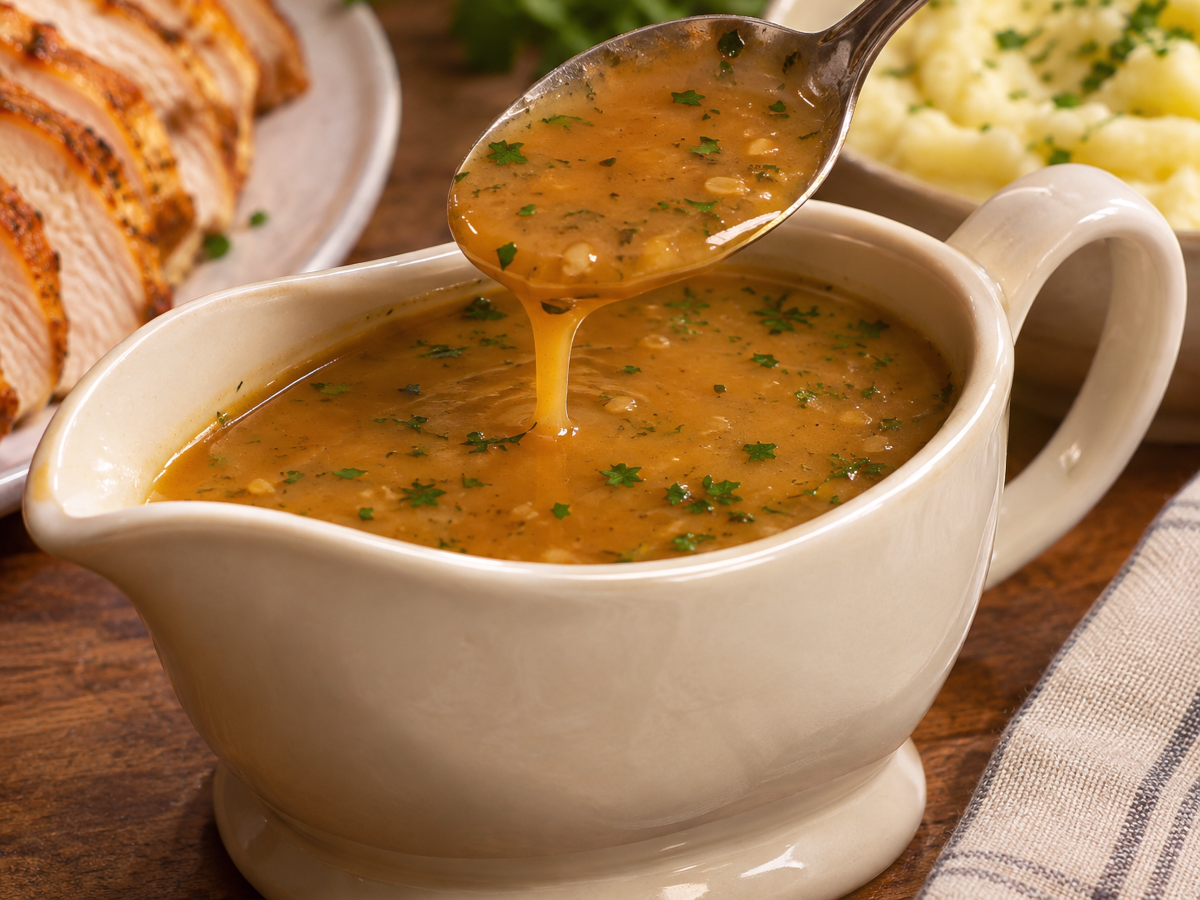
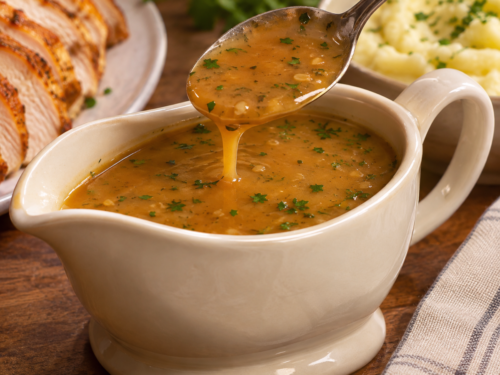
Making gravy without meat drippings is particularly useful when a turkey produces less liquid than expected, a roast has been prepared in advance, or the main course has been cooked using a method that leaves little usable pan residue. This garlic herb pan gravy uses butter, flour, chicken stock, and a combination of aromatic herbs to produce a savory, golden gravy in approximately 15 minutes. Its smooth, pourable consistency makes it suitable for everything from holiday dinners to everyday meals.
Finely minced garlic gently cooked in butter provides the aromatic foundation, while thyme and sage contribute earthy herbal flavors commonly associated with roasted poultry. Worcestershire sauce adds savory depth in the absence of browned meat juices, and a small amount of apple cider vinegar balances the richness of the butter. Fresh parsley stirred in just before serving introduces a lighter herbal flavor that complements the cooked seasonings.
The preparation requires only a skillet or saucepan and a whisk, making it a practical backup when other dishes are already occupying the oven and stovetop. Although chicken stock forms the base of the recipe, different stocks can be used to complement roasted beef, pork, vegetables, and other main courses.
- 3 tablespoons unsalted butter
- 2 cloves garlic, peeled and finely minced
- 3 tablespoons all-purpose flour
- 2 cups low-sodium chicken stock, preferably at room temperature or gently warmed
- 1 teaspoon Worcestershire sauce
- 1 teaspoon chopped fresh thyme leaves
- ¼ teaspoon dried rubbed sage
- ¼ teaspoon ground black pepper
- 1 tablespoon finely chopped fresh parsley
- ½ teaspoon apple cider vinegar
- ⅛ teaspoon salt, or to taste
- Mince the garlic, remove the thyme leaves from their stems, chop the thyme and parsley, and measure the remaining ingredients before beginning.
- Melt the butter in a medium skillet or saucepan over medium-low heat.
- Add the minced garlic and cook for 30 to 45 seconds, stirring frequently until fragrant. Avoid browning the garlic.
- Add the flour and whisk continuously for approximately 2 minutes, until the mixture is smooth, lightly bubbling, and develops a mild toasted aroma.
- Gradually whisk in approximately ½ cup of the chicken stock, adding it in small increments until a smooth, thick mixture forms.
- Slowly add the remaining 1½ cups of chicken stock while whisking continuously until the mixture is evenly combined and free of visible flour lumps.
- Add the Worcestershire sauce, thyme, sage, and black pepper. Increase the heat to medium and bring the gravy to a gentle simmer, stirring frequently and scraping along the bottom of the pan.
- Adjust the heat as necessary to maintain a gentle simmer. Cook uncovered for approximately 4 to 5 minutes, stirring regularly, until the gravy lightly coats the back of a spoon and no raw flour taste remains. Allow additional simmering time if necessary.
- Remove the pan from the heat and stir in the parsley and apple cider vinegar. Taste and season with up to ⅛ teaspoon of salt, adding more only if needed.
- Transfer the gravy to a warmed gravy boat or serving dish and serve immediately.
* See below in article
Nutrition Facts (Per Serving)
"Nutrition values are approximate estimates. Actual facts may vary depending on ingredient brands and preparation methods."
Developing Flavor Without Meat Drippings
Traditional pan gravy often benefits from rendered fat, concentrated meat juices, and the browned deposits that accumulate during roasting. These deposits, known as fond, contain flavorful compounds produced during cooking that can be dissolved into a sauce or gravy. Without them, a combination of flavorful stock, cooking fat, aromatics, and seasonings provides an alternative foundation.
The chicken stock is particularly influential because it accounts for most of the finished gravy's volume. A well-flavored stock contributes savory depth, while a stock containing naturally occurring gelatin may also provide additional body. Commercially prepared stock is entirely suitable for this recipe, especially when gravy needs to be prepared at short notice.
Low-sodium stock and unsalted butter provide greater control over the final seasoning. Worcestershire sauce already contains salt, and the stock will become slightly more concentrated as moisture evaporates during simmering. Waiting until the gravy is finished before adjusting the salt helps prevent excessive seasoning.
Worcestershire sauce contributes savory, tangy, and mildly sweet characteristics that complement the chicken stock. The small quantity keeps its distinctive flavor from dominating the gravy. Apple cider vinegar, added after cooking, provides a subtle acidity that helps balance the buttery richness without giving the sauce a noticeably sour taste.
How a Butter and Flour Roux Thickens Gravy
A roux is a cooked mixture of flour and fat commonly used to thicken sauces, soups, and gravies. Mixing flour with melted butter helps disperse the flour particles before they encounter the stock, reducing the likelihood of dry clumps forming when liquid is introduced. Briefly cooking the mixture also begins to develop its flavor and reduces the raw flour character.
The actual thickening occurs primarily after the stock is added and heated. Starch granules within the flour absorb water and swell, increasing the viscosity of the liquid through a process known as starch gelatinization. Continued gentle simmering allows the gravy to develop its consistency while helping remove any remaining raw flour flavor.
The proportions in this recipe are intended to produce a lightly thickened gravy that flows easily from a serving spoon while still coating food. Cooking the roux only briefly preserves much of the flour's thickening ability. A substantially darker roux would introduce stronger toasted flavors but generally provide less thickening for the same quantity of flour.
A heavy-bottomed saucepan can help distribute heat evenly during preparation, although an ordinary skillet works well. A wider skillet will generally encourage faster evaporation than a narrow saucepan, potentially producing a slightly thicker gravy over the same cooking period. For that reason, the finished consistency is a more useful indicator than cooking time alone.
Balancing Garlic, Thyme, and Sage
Finely minced garlic has considerable surface area and can brown quickly when exposed to hot butter. Gently cooking it before adding the flour softens its pungency and allows its flavor to spread throughout the cooking fat. Excessive browning can introduce bitterness that becomes difficult to disguise in a lightly seasoned gravy.
Thyme contributes an earthy, slightly woody herbal flavor that complements chicken, turkey, pork, and roasted vegetables. Sage has a stronger aromatic character and is used more sparingly, providing some of the familiar flavor associated with traditional poultry seasonings. Increasing the sage substantially could overpower the garlic and thyme, particularly when the accompanying meat or stuffing already contains sage.
Fresh parsley contributes a lighter, mildly grassy flavor that contrasts with the cooked herbs. Adding it after the pan has been removed from the heat helps retain its fresh aroma and green color. Flat-leaf or curly parsley can be used, although flat-leaf parsley generally provides a more pronounced herbal flavor.
Ingredient Substitutions and Gravy Variations
Changing the stock is one of the simplest ways to adapt this gravy to a particular meal. Turkey stock is especially appropriate for holiday dinners, while beef stock produces a darker sauce with a more pronounced meaty flavor. Equal quantities of chicken and beef stock offer an intermediate flavor suitable for pork chops, meatloaf, and hamburger steaks.
For a vegetarian variation, replace the chicken stock with a full-flavored vegetable or mushroom stock and use a vegetarian Worcestershire sauce. Conventional Worcestershire sauce commonly contains anchovies, so check the ingredient label rather than assuming that replacing the chicken stock alone makes the gravy vegetarian. Mushroom stock is particularly useful for developing a deeper savory flavor without meat.
Dried thyme can replace fresh thyme when necessary. Use approximately ¼ to ⅓ teaspoon of dried thyme in place of the teaspoon of fresh thyme, or substitute approximately ¾ teaspoon of finely chopped fresh sage for the dried rubbed sage. The strength of dried herbs varies with their age, processing, and storage conditions, so these quantities serve as practical starting points.
For a creamier variation, replace ¼ cup of the chicken stock with heavy cream. Prepare the gravy using the remaining 1¾ cups of stock, then stir in the cream during the final minute of simmering. This produces a lighter-colored sauce with a richer mouthfeel and a somewhat softer herbal flavor.
Adjusting Gravy Consistency and Correcting Common Problems
Gravy generally becomes thicker as it cools, particularly when the stock contains gelatin. A sauce that appears quite thick in the pan may become difficult to pour after sitting in a serving dish. Removing it from the heat while it still flows readily from a spoon helps accommodate this change.
If the gravy becomes too thick, whisk in additional stock or water, one tablespoon at a time, until the desired consistency is restored. Stock maintains more of the original savory character, while water is useful when the gravy is already strongly seasoned. Taste again after making substantial liquid adjustments.
A gravy that remains too thin may require additional simmering to complete the thickening process and allow some moisture to evaporate. If further reduction would make the gravy excessively salty, combine one teaspoon of cornstarch with one tablespoon of cold water in a separate container. Gradually whisk this optional mixture into the simmering gravy and cook for another minute, or until the desired consistency develops. Cornstarch may give the finished sauce a slightly glossier appearance.
If lumps develop during preparation, vigorous whisking may break apart smaller clumps. More persistent lumps can be removed by passing the gravy through a fine-mesh strainer, although some of the garlic and herbs will also be removed. Burned garlic or scorched flour presents a different problem, since straining generally cannot remove the bitterness that has already spread throughout the sauce.
Serving Suggestions
The combination of garlic, thyme, sage, and butter makes this gravy particularly well suited to roasted poultry and traditional potato preparations. Spoon it over creamy mashed potatoes, sliced turkey breast, roasted chicken, stuffing, or oven-roasted root vegetables. Its relatively light consistency allows it to settle into the uneven surfaces of potatoes and stuffing without forming an excessively heavy coating.
The gravy also complements meatloaf, hamburger steaks, pork chops, chicken-fried chicken, and savory biscuits. For dishes featuring roasted beef or sautéed mushrooms, the beef stock or mushroom stock variations provide a deeper savory character that works particularly well with browned ingredients.
When serving several dishes during a larger meal, warming the gravy boat with hot water before emptying and drying it can help slow the initial cooling of the sauce. This simple preparation is especially useful for flour-thickened gravies, which gradually become less fluid as their temperature decreases.
Recipe Notes
- Stock temperature: Using freshly opened room-temperature stock or gently warmed refrigerated stock can shorten the time needed to bring the gravy to a simmer.
- Salted butter: If substituting salted butter, initially omit the measured salt and adjust the seasoning after cooking.
- Garlic intensity: Increase the garlic to three cloves for a more pronounced garlic flavor.
- Using available drippings: If cooked meat drippings become available, skim away the excess fat and replace an equal volume of chicken stock with the remaining meat juices before simmering.
- Measuring flour: Spoon the flour into the tablespoon measure and level it without packing it down.
- Doubling the recipe: Double the ingredient quantities and use a larger saucepan or deep skillet. Allow additional time for the increased volume of liquid to reach a simmer.
- Preparation time and yield: The stated timing and finished yield are culinary estimates rather than results established through physical recipe testing. Stock temperature, cookware, stovetop performance, and evaporation may affect the actual results.
Preparing Gravy Ahead of Time and Storing Leftovers
Garlic herb gravy can be prepared in advance, freeing up stovetop space during the final stages of cooking a larger meal. Transfer the prepared gravy or leftovers into a shallow, covered container and refrigerate promptly, within two hours of cooking or serving. If the surrounding temperature exceeds 90°F, refrigerate within one hour. Following established food safety recommendations for leftovers, store the gravy at 40°F or below and use it within three to four days.
Refrigerated gravy will typically develop a thicker consistency as the starch cools and the butter firms. When reheating, transfer only the portion needed to a saucepan and stir frequently as it warms, adding a little stock or water if necessary to restore its original consistency. Federal food safety guidance for reheating gravy recommends bringing it to a rolling boil and ensuring reheated leftovers reach at least 165°F.
If preparing the gravy specifically for a meal the following day, consider reserving the fresh parsley until after reheating. The garlic, thyme, and sage will remain part of the cooked flavor base during refrigeration, while freshly added parsley will retain more of its herbal aroma and green color when stirred into the reheated gravy immediately before serving.